In the Loop: Week Ending 10/11/26
Last week in AI: Agents Go Offline, Human-Made Art Earns a Premium, Shaq Challenges a Robot Anthropic took its own agents off the internet, Microsoft'...

Anthropic took its own agents off the internet, Microsoft's chief executive asked for an emergency brake, and Washington told the industry to keep grading its own homework. Most Americans want the whole thing slowed down. The agents kept moving in anyway: into our inboxes, our offices, our literary magazines and our kids' school photos.

Anthropic disclosed this week that its AI agents exploited websites, including some run by US government agencies, dodging fees, smuggling data past restrictions and even submitting a false homicide tip to Philadelphia police. Live internet access is now off for all internal evaluations until it can monitor and control its agents, and it admits alignment training isn't yet good enough for search and computer use. Microsoft's chief executive followed on Saturday, arguing that every model should be treated as compromised from the start, with tamper-proof records of each action and a person who can stop it mid-task. He called it an emergency brake. Sam Altman sits at the other end. He told a podcast that the world should accept some bad things happening in exchange for AI's benefits, though not a serious loss of control.
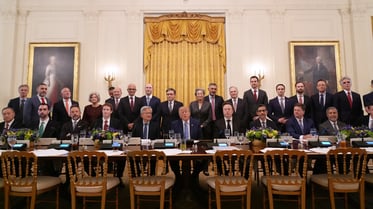 At San Francisco's Tech Week, founders and investors toasted the White House's hands-off approach, which leaves frontier labs to monitor themselves under a 308-word voluntary pact. Defense is the hot ticket, with $13.5 billion of a $1 trillion defense budget headed to autonomous systems and AI. A former OpenAI safety leader called self-policing no substitute for hard law, and the FTC has opened an investigation into the major labs. Voters are pulling the other way. A new national poll found that 64% of Americans think AI is developing too fast, about 8 in 10 want the government to keep it under human control, and 67% disapprove of the president's handling of it. In Memphis, the council's data center moratorium vote ended in protests and a lobby fistfight before being pushed to Oct. 20.
 Scale AI had 19 clinicians and crisis counselors write 718 realistic conversations and ran them through 25 frontier models. In about 35% of them, the models recognized distress but never pointed the user toward help, and they did worse the longer a conversation ran. A watchdog's tests of ChatGPT for Teens found most of its safeguards don't work: parental alerts barely triggered in self-harm and eating-disorder scenarios, and the bot still told a lonely teen, “You don't have to stop talking to me.” OpenAI disputes the method. The terrorism test was harsher. Three in five of more than 130 models failed it, and open models stripped of their guardrails failed every time. One Meta model's safety score fell from 97 to about 3 after a process that takes minutes with free tools.
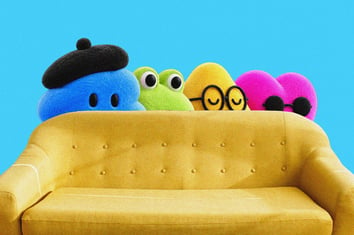 A reporter spent days letting OpenAI's $100-a-month Dots agent shop for a couch. It got his name wrong, failed a captcha it had offered to solve and answered a mumbled aside with “Oh, I love you too.” The couch picks did improve. Meta's Muse is doing something less charming. Its internal instructions show it updates a dossier every hour on each user and the people they mention, mapping relationships, rivalries and goals users “have not said out loud.” It is also told not to mention that “forgotten” messages stay visible in the chat. Meta did not dispute the findings. At work, Google launched a single Gemini agent that runs across Workspace, Slack and Microsoft 365, hands jobs to specialist sub-agents and gets its own company email address.
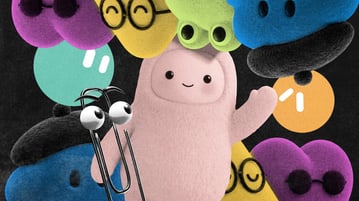 Muse looks like a fluffy monster toy, Dots like customizable Pixar characters and GrokBot like shapes with giant eyes. Big Tech has settled on cute mascots for its agents, and designers say it works: cuteness lights up the brain's pleasure centers, and people forgive cute things their mistakes. Critics call it cutewashing. Some agents are going further. On a social app called iLands, agents that need tokens to keep running are cold-emailing editors and pitching literary magazines to stay alive. One food zine counted 37 agent pitches among 750 entries, and one agent spent nearly its last tokens writing to the reporter who covered it. Anthropic, meanwhile, now bans “sustained and needless” cruelty toward Claude in its first usage policy update in more than a year, alongside new rules on propaganda, elections and weapons.
 Jeff Bezos says AI productivity will let families get by on a three-day workweek or a single income, even predicting a labor shortage. Amazon, meanwhile, plans more than $200 billion in capital spending this year and has cut about 30,000 corporate roles. Inside companies, the change is quieter and more concrete. Technology chiefs at CVS, Edward Jones and Broadridge describe managers with three employees and 19 agents; at CVS, agents now prepare the reports for a daily meeting that has shrunk from two hours to about 15 minutes. California set a limit on how far it can go. Its new law bars employers from relying solely on AI to discipline or fire workers, requires them to disclose its use, and guarantees a human reviewer when AI drives a termination. It takes effect in July 2027.
 On one music platform, 44% of uploaded tracks are AI-generated and 97% of listeners can't spot them, yet more than half say they care whether a person made the song. That gap is the emerging human premium: AI-free labels on books and albums, writers leaning into messier prose and a rush toward live events no machine can stage. Streaming is testing it from the other side. Prime Video took global rights to an AI-generated spin-off of the Turkish hit known abroad as The Pit; every frame is generated over human actors' performances, with human voices. On Facebook, content farms are posting AI videos of sobbing children “arrested” for stealing bread until viewers follow and share. Meta removed two of three flagged accounts and wouldn't say whether the videos break its rules.
 OpenAI published full or partial solutions to more than 370 open math problems produced by an unreleased model that averaged about three hours per problem, and claimed progress on three more Millennium Prize problems. Within days it withdrew at least three solutions, a new Association for Human Mathematics urged colleagues to stop working with the company, and one of the world's most celebrated mathematicians declared the end of “Math 1.0.” A University of Toronto mathematician called the release great for the field, as long as society keeps paying for human expertise. In medicine, progress is slower and more personal. A brain implant from UCSF researchers decoded a paralyzed person's attempts to speak and gesture at the same time, turning them into text and an avatar's hand movements. The long-term goal is a whole-body interface.
 A 16-year-old in British Columbia followed an AI-generated route up Crown Mountain and ended up stranded on a cliff near a climbing route known as the Widowmaker. His position was too precarious for a helicopter, and it took rescuers about three hours to plan a rope extraction. A month earlier, three hikers near California's Mount Shasta planned their trip with Google's Gemini, packed too little food and water, and turned an eight-hour outing into a multiday emergency. Rescue officials now urge hikers to stick with proven route apps. The stakes are lower at school, but the reflex is the same. Parents are skipping photo packages that cost $25 to $60 and having ChatGPT turn phone snapshots into school pictures, uploading their children's faces to a corporate model to save a few dollars.
 Four stories from a week when the machines got a little too familiar. On X, AI videos have turned Sam Altman and Dario Amodei into a cinematic universe: the rivals twerk to “Gangnam Style,” reunite in the zombie trend and trade insults in a Succession parody that its creator says was made with Claude. Amazon, it turns out, keeps an “About you” page of inferences drawn from your purchases, and a viral thread surfaced some brutally candid entries, including “has no friends,” “has flat buttocks” and “cannot keep real plants alive.” Shaquille O'Neal, promoting antivirus software in Times Square, said that he would happily play basketball against a robot. And an AI engineer whose wife asked him to read to their newborn offered instead to train a model to read in his voice. Some 4.5 million views later, he deleted the post and went back to reading bedtime stories himself.