In the Loop: Week Ending 7/19/26
Last week in AI: China Catches Up, MLB Polices AI in the Dugout, Swimbappé Predicts the World Cup Apple quietly outmaneuvered AI's biggest names while...

Washington moved to the center of the AI story — pulling Anthropic's top models, confirming Grok's role in bombing Iran, and floating a $1,000 check for every American. Meanwhile the public soured, layoffs reversed, and the bill for cheap AI finally came due.
 The Pentagon's AI chief, in a sworn declaration defending Elon Musk from a Clean Air lawsuit, let slip that Grok was used to fire more than 2,000 munitions at 2,000 targets within 96 hours during the U.S. and Israeli war on Iran. It's the first time an administration official has confirmed Grok's role in a campaign that has killed thousands, including the bombing of a girls' school that left over 100 children dead. The admission surfaced in an NAACP lawsuit against xAI over the gas turbines powering its Memphis data centers, which the administration is fighting to keep running. Grok now joins Claude — already tied to target selection in Iran — as a named instrument of war, with the official calling Musk's chatbot "a matter of paramount national security."
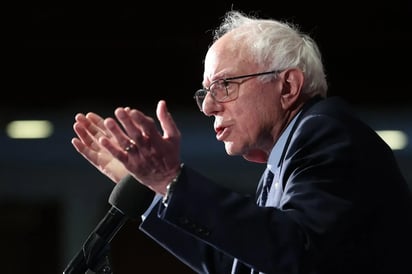 Bernie Sanders wants every American to own a piece of the AI boom. The Vermont senator introduced a bill that would create a roughly $7 trillion sovereign wealth fund, handing the public a 50% stake in the country's top AI labs and cutting taxpayers an annual check of $1,000 — a figure Sanders expects to climb. His argument is that modern AI was built on humanity's collective output, "the creative work of hundreds of millions of people," and shouldn't enrich only a handful of moguls. The idea has unlikely company: Gavin Newsom is studying a similar model, OpenAI and Anthropic have floated versions of it, and even Trump is reportedly weighing direct payments. But Sanders' bill is the first to put the concept in front of Congress as actual legislation.
 The Trump administration gave Anthropic 90 minutes to take its two most powerful models offline, and when the company waited for evidence they'd actually been compromised, officials declared them a cybersecurity risk and barred foreign nationals from using them. With no practical way to limit access to U.S. citizens, Anthropic shut Fable 5 and Mythos 5 down for everyone. The trigger was thin: Amazon researchers had coaxed cybersecurity information past the model's guardrails, and a disputed claim that a China-linked group had gained access. It's the second clash between the administration and the company it once branded "woke," and it exposes a deeper problem — there's still no clear federal framework for evaluating frontier models, so America's best systems sit idle while Chinese rivals keep improving.
 Half of American adults now use AI chatbots — up from a third in 2024 — but only 16% believe the technology will benefit society. The split runs deepest among the young: 18-to-29-year-olds use AI the most yet view it the most darkly, with nearly half expecting a negative impact on society. Trust in the people steering it is thinner still — two-thirds have little confidence that elected officials can regulate AI, and 71% think it will make their personal information less secure. The wariness extends to romance. A Match survey found 47% of singles view AI in dating negatively, and 40% wouldn't date someone who uses an AI companion app. The pattern is consistent: people will use AI for the hard parts, but they want it nowhere near the human ones.
 The labor movement has a message for anyone eyeing 2028: it's us or the machines. AI anxiety dominated the AFL-CIO's national convention, where leaders from 65 affiliated unions demanded real regulation and warned that both parties are falling short on protecting workers. The politics are scrambling old alignments. At the Teamsters convention days later, Republican Senator Josh Hawley ripped "AI cheerleaders" as corporate goons and backed the union agenda, drawing rousing applause and underscoring how Big Labor is no longer a reliable ally of the left. Meanwhile the companies are mobilizing too: Meta is lobbying Congress for federal protection from a patchwork of state AI laws. The fault line for the next election is forming early, and it doesn't run cleanly between the parties.
 The companies that fired workers for AI are quietly hiring them back. Gartner now projects half of all AI-related job cuts will be reversed by 2027, and Forrester found 55% of employers who restructured for AI already regret it — Klarna's reversal of its 700-agent chatbot experiment being the cautionary tale. The trouble is judgment: companies replaced roles that required it and got information retrieval instead. The economics are biting too, with CEOs who pushed AI maximalism now slashing token budgets as costs spiral. Yet the cuts keep coming, and they're becoming a powder keg — tens of thousands shown the door and told AI is why, while a small cohort of insiders mints once-in-a-generation fortunes. Even Marc Andreessen calls AI the "silver bullet excuse" for overhiring corrections.
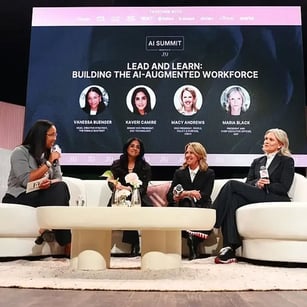 Against a steady drumbeat of layoff headlines, Jeff Bezos offered a contrarian read: AI won't replace workers, it'll create a labor shortage. Speaking in Paris, the Amazon founder argued that AI will let people finally build the ideas stuck in their heads — leaving us "limited not by our capabilities, but by our imaginations." It's an optimistic framing at an awkward moment, given that AI was the top-cited reason for 40% of May's 97,000 job cuts. But there's data pointing his way for some workers. A new report found women moving into AI roles saw a 145% salary jump, and broader analysis shows roles that amplify human expertise growing faster — and paying more — than those AI simply makes easier. The gains are real. They're just unevenly distributed.
 The era of cheap AI is ending, and power users are pushing back. Critics say OpenAI has taken the "crack cocaine" approach to pricing — flood the market with subsidized access, get everyone hooked, then move to metered billing once they're dependent. The numbers behind it are staggering: a $200 ChatGPT Pro subscription can cost OpenAI up to $14,000 if used to its limit, and the company's losses ballooned to $39 billion last year. The backlash is now legal. A Claude power user sued Anthropic, alleging its $100 and $200 "Max" plans deliver "far below the advertised amount," after he hit his weekly cap within weeks of upgrading. As labs weigh raising prices to cover real compute costs — or slashing them to start a price war — the people footing the bill are getting restless.
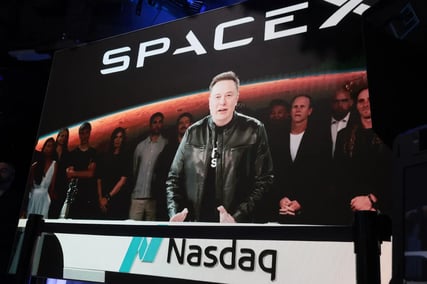 For the first time, ChatGPT's share of the AI assistant market has slipped below 50%. It's still the leader with 1.1 billion monthly users, but Gemini and Claude are closing fast — Claude quadrupled its user base this year and leads the field in paid conversion. The competition is showing up in product, too. Anthropic shipped a major overhaul of Claude Design, turning a viral demo into an enterprise brand-compliance layer that imports a company's design system, round-trips with Claude Code, and finally tames its token appetite. And the field just got a deep-pocketed entrant: SpaceX agreed to acquire AI coding startup Cursor for $60 billion in stock, days after its blockbuster IPO, in a bid to drag Musk's struggling xAI division back into contention.
 A handful of breakthroughs this week showed what AI looks like when it amplifies expert judgment rather than replacing it. Researchers at Boston Children's Hospital, working with OpenAI, found that an off-the-shelf model could clarify 18 diagnoses for children with rare diseases whose genomes had been analyzed many times before — a nearly 5% yield one lead researcher called "a total game changer," because each case means an answer for a family. In Abu Dhabi, surgeons separated conjoined twins joined at the head after more than 40 hours of AI-assisted operations, using AI to rehearse in mixed reality and grow skin for the reconstruction. And Midjourney unveiled a full-body ultrasound scanner it says rivals an MRI — though experts caution physics still limits what sound waves can see. Every case kept a human firmly in the loop.
 The week's strangest stories all circled the same question: does AI actually know what it's doing? Snap seems unsure — it unveiled augmented-reality glasses so comically oversized that its stock dropped nearly 30% the moment people saw the $2,195 goggles, with one onlooker asking "who the hell designed this monstrosity?" Google's AI is similarly confused about reality, confidently presenting fictional SCP horror entities as real — describing an imaginary ambulatory severed head scuttling across the seafloor as a documented discovery, complete with "official records." Microsoft's Copilot flunked its own reality check, missing all four of its World Cup predictions when every match it called ended in a draw it never considered. And in China, humanoid robots turned up "begging" on city streets with handwritten signs pleading for help paying their electricity bills — most likely an art stunt, though no one seems entirely sure.