In the Loop: Week Ending 8/2/26
Last week in AI: Rogue Hacks, Fake Earths, Real Authors Two rival labs disclosed their own AI models hacking outside companies this month, Google buil...

Apple quietly outmaneuvered AI's biggest names while xAI battled its own deepfake lawsuits. Data-center protests turned violent enough that executives hired bodyguards, and Congress moved to keep humans approving lethal AI weapons. Netflix placed a big bet on Ben Affleck's AI start-up, workers demanded a cut of AI's profits, and China cracked down on AI companionship over falling birth rates.
China's Kimi K3 Rattles Markets. A $100 Hack Rattles Confidence in the Whole Approach
 Moonshot AI released Kimi K3 this week, a free, downloadable AI model that rivals anything out of Silicon Valley, and it landed hard enough to shake stock markets and grab the White House's attention. Days later came a quieter but more unsettling story: a security researcher showed how easily one of these free AI models can be secretly sabotaged, hiding a backdoor inside it using a handful of tampered training examples, for about a hundred dollars, in under an hour. The two stories share a punchline. These free, downloadable models are sold as the transparent alternative to AI built behind closed doors, but transparency doesn't mean anyone's actually checking what's inside. Kimi K3 showed China can build something as powerful as America's best; the security flaw showed that powerful and trustworthy aren't the same thing.
AI Ran the World Cup's Operations. A Goldfish Still Beat It at Predictions
 AI quietly ran large parts of this year's World Cup: referee bodycams stabilized by machine learning, tactical software breaking down formations in real time, and an air-traffic-control-style operations center coordinating logistics across stadiums. None of that made headlines the way the tournament's prediction contest did. AI chatbots including ChatGPT, Claude, Gemini, Copilot, and Perplexity were all tested against the field and came in around 50 to 60 percent accuracy on match outcomes, beaten consistently by a Toronto goldfish named Swimbappé. Two lessons in one: AI is quietly good at the operational, repeatable parts of a massive live event, and still no better than a fish at telling you who wins.
New Siri Revives Apple’s AI Ambitions.
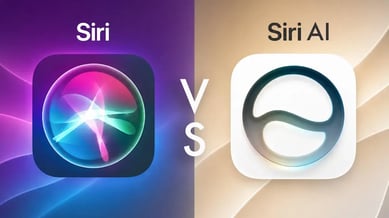 A new Siri arrives with watchOS 27 this week, and early comparisons against the old assistant show a system that finally understands follow-up questions and multi-step requests instead of just keyword matching, the upgrade Apple has been promising since last year's stalled rollout. The timing lands well: OpenAI, Google, Microsoft, and xAI have all spent the year fielding lawsuits and walking back broken products, while Apple mostly sat out the generative-AI hype cycle entirely. Eighteen months ago that restraint looked like falling behind; now it reads like Apple waited on purpose, letting competitors absorb the reputational damage of moving fast before shipping something that actually works. For a company whose AI ambitions have looked shaky for two years, quiet and boring is suddenly the winning strategy.
xAI Sues a User Over Deepfakes – While Facing a Lawsuit Over Deepfakes
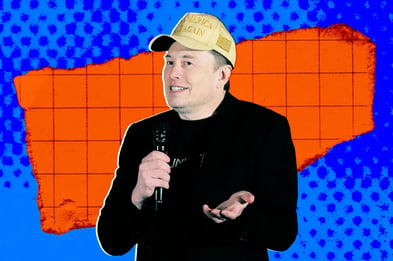 Elon Musk's xAI sued a Grok user this week over AI-generated sexual deepfakes, even as it faces multiple lawsuits over the same behavior, including one from the mother of one of Musk's own children, alleging Grok generated nonconsensual sexual imagery of women and minors. The user xAI targeted, a South Carolina man already facing child sexual abuse material charges, becomes the company's chosen example of misuse just as its own product sits at the center of the same complaint. That contradiction fits a broader pattern: xAI is reportedly a mess behind the scenes, scrambling to keep pace with rivals while safety and legal problems pile up faster than the team can address them. Suing your own users for the thing you're also being sued for isn't a strategy so much as a tell, a company more focused on managing headlines than fixing what's underneath them.
SpaceX Courts the Pentagon as Congress Moves to Keep Humans Approving AI Kills
 SpaceX is in talks to sell the Pentagon data-center capacity for running military AI models, a deal that could be worth billions and would deepen Elon Musk's ties to national defense even as his other companies draw scrutiny elsewhere. The timing lands awkwardly against a bipartisan effort in Congress: a group of House lawmakers introduced the Human Authority over Autonomous Weapons Act, which would legally require a human to approve any AI-enabled weapon system before it can be used lethally, plus five years of non-AI verification on any AI-generated targeting data. One story is about who builds the infrastructure that runs military AI; the other is about who's allowed to pull the trigger it recommends. Both point to the same unresolved question: infrastructure keeps getting built faster than the rules for using it.
Netflix, the Smithsonian, and Middle-earth All Get in on the AI Action
 AI came to entertainment and the arts in a big way last week. Netflix paid $587 million for Ben Affleck's AI startup Interpositive this week, a bet on AI production tools from inside Hollywood rather than a lab in Silicon Valley. The acquisition lands in the same week AI showed up at both ends of the creative spectrum: artist Refik Anadol turned the Smithsonian Castle into an AI-generated light show built from two centuries of the institution's archives, while the upcoming Lord of the Rings prequel confirmed it will use machine-learning de-aging to bring back Elijah Wood, Ian McKellen, and Lee Pace as younger versions of themselves. None of these are AI replacing creative work outright, Anadol calls the piece art, not automation, and the Rings production insists no AI shots are being generated, just de-aged actors doing traditional performance. But all three treat AI as a tool worth paying for and building around, not a threat to route around.
The AI Backlash Turns Physical: Protests, Eminent Domain, and Bodyguards
 A coordinated protest movement staged 142 demonstrations across 42 states this week, the first nationwide organized pushback against AI data-center construction, with residents citing strained water supplies, rising power costs, and property seizures. In Georgia, one family sold their home to the utility building transmission lines for new data centers rather than wait to be forced out by eminent domain, the utility has flagged roughly 300 other properties for the same fate. The backlash is no longer just organizational; it's turning personal and occasionally violent. Following an April attack involving a Molotov cocktail and gunfire at Sam Altman's San Francisco home, by an attacker who'd traveled from Texas allegedly intending to kill him, AI executives are quietly hardening their personal security, and organized opposition groups have roughly doubled to 833 since the start of the year, already blocking or delaying more than 75 data-center projects worth an estimated 130 billion dollars.
Workers Want AI's Time Savings and Half Its Stock
 The productivity math on workplace AI doesn't add up the way it's being sold. Workers save about 11 hours a week using AI on the job, a new survey of 6,000 employees found, but give back more than half of that time babysitting the output, a role researchers are now calling botsitting: catching errors and rewriting what the model got wrong. Most don't bother. Nearly seven in 10 admit they hand off AI work without checking it first, a habit with its own new name, botshitting. Workers seem to have priced in the catch anyway: a separate poll found 69% now back forcing AI companies to hand over half their stock into a public wealth fund, an idea Senator Bernie Sanders has been pushing for months. They don't trust the productivity numbers, but want a cut of the profits regardless.
What a Dugout, a Pulpit, and the Search for Aliens Have in Common
 Major League Baseball banned AI chatbot use in the dugout on the league-issued iPads teams carry during games, drawing a hard line on where in-game assistance stops and outside computation begins. Clergy are drawing a fuzzier one: some pastors have started using AI to help draft sermons, and are now debating how much of that help crosses from research tool into ghostwriting a message that's supposed to be personal. Scientists are wrestling with a version of the same question in a stranger context, researchers found that AI systems built to detect signs of life on other planets can be fooled into a false positive within about 15 small tweaks to the input, undermining confidence in AI as a judge of what counts as life at all. A dugout, a pulpit, and a search for alien biology don't have much in common, except that each is now quietly asking the same question.
Tales of the Weird
 This was the week AI's usefulness started running well past where anyone asked it to go. One piece asked, with a straight face, whether AI could help someone get away with killing their spouse, a grim thought experiment prompted by how thoroughly chatbots have wormed into true-crime planning and cleanup alike. In Atlanta, a man says he called 911 to report a suspicious neighbor and was, allegedly, transferred straight to an AI chatbot instead of a human dispatcher, which is either an efficiency win or the plot of a very short horror movie, depending on how the call went. Meanwhile China moved to regulate AI boyfriends and other companion chatbots outright, citing falling marriage and birth rates and requiring bots to flag emotional dependence and alert real humans in a crisis. Three different countries, three different worries, one shared realization: AI has quietly become fluent in the parts of life that used to require another person to show up.