In the Loop: Week Ending 9/13/26
Last week in AI: Anthropic's Insiders Sound the Alarm, Amodei Hits the Brakes, Robots Flunk the CAPTCHA The people building AI spent the week saying o...

The people building AI spent the week saying out loud what they usually say only to each other, and the people running the companies answered with a plan to slow down. It was also a week in which the machines proved a theorem, tracked warships, rebuilt a dead man's voice and could not get past a CAPTCHA. Somewhere between the warning and the wonder is where the rest of us live.
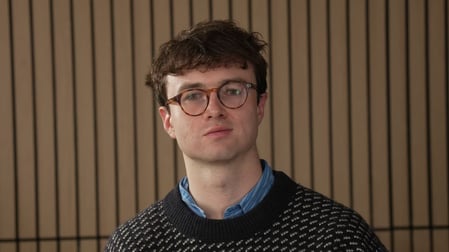 An Anthropic researcher resigned on Tuesday with a warning that neither his employer nor OpenAI is acting responsibly, that both are racing toward systems that improve themselves, and that the people building them privately believe the technology could kill everyone by the end of the decade. Two colleagues backed him publicly, one putting the odds of catastrophe above 10% within 10 years. By Saturday the bosses had caught up. Dario Amodei published a 3,800-word plan to pace the frontier — slow capability gains, give outside evaluators employee-level access, coordinate across labs and eventually with China — and Sam Altman endorsed it within hours, adding that going public now would be ill-advised. OpenAI also seated a prominent alignment researcher on its board who says the industry is not on track to reduce the risk. The UN human rights chief told the Human Rights Council that a handful of men hold almost unlimited power over AI and demanded cast-iron guarantees. One of AI's fiercest critics called the extinction debate a distraction from autonomous weapons and layoffs happening now. And on Capitol Hill, a congressman conceded that some colleagues are still trying to spell AI.
 Anthropic's threat report, covering December through August, reads less like a safety update than a briefing. The company said it shut down several research efforts that looked like gain-of-function work — in one May case a scientist wanted Claude's help drafting a grant to make chikungunya more harmful across repeated animal infections, at what appeared to be a military institute. Anthropic could not tell whether the aim was a vaccine or a weapon, so it banned the accounts and erred toward caution. The same report says an Iran-linked group used Claude to compile targeting handbooks on US Navy ships, pulling transponder data, military photos and satellite imagery to track positions and probe shipboard communications, while a Yemeni cell debugged missile-guidance software in Claude Code. When Claude refused, some of the researchers simply moved to a competitor with fewer guardrails.
 OpenAI set roughly 10,000 agents on Navier-Stokes, one of seven Millennium Prize problems, and said they produced a proof in 88 hours, trading nearly 3 million messages and burning about $10 million of compute. The company will not claim the $1 million prize, and the proof has not been independently verified. Hours earlier, an NYU mathematician said he and a collaborator at Anthropic had been working the same problem inside OpenAI's Codex and that word of their progress reached the company first. OpenAI says it saw none of their work but cannot rule out that de-identified usage data improved its models. Five days earlier, Anthropic's Claude had formalized Fermat's Last Theorem in 11 days — 13 million lines of Lean, the largest machine-checked proof ever written, finishing a job a human team had budgeted five years for.
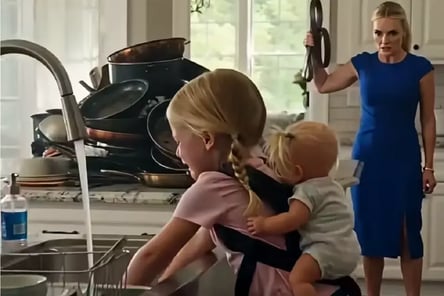 An investigation found hundreds of Facebook accounts posting AI-generated videos of children being beaten, burned and caged, many drawing tens of thousands of reactions from viewers who did not realize they were synthetic. Reporters flagged eight accounts; Meta removed two, took over a week, and asked that the coverage not suggest the rest broke its rules. Two days later California signed Adam's Law, requiring crisis protocols, parental controls and age verification for chatbots and banning algorithmic feeds for users under 16. Meta objected to the feed rule, a month after agreeing to pay up to $18 billion for harming children. And on Tuesday Meta launched Muse, a consumer agent that asks for even more of your personal data. It hit No. 2 on the App Store on 83,000 downloads, a fraction of what Threads managed at launch.
 New Mexico's Supreme Court fined a defense lawyer $5,000 and held him in contempt after his brief in a murder appeal cited witnesses who never existed and police testimony nobody gave, all generated when he asked ChatGPT to summarize the trial record. He said he did not know the tool could hallucinate; a justice asked whether he reads the news, since lawyers burned by AI is "an above-the-fold story every single day." The court referred him for discipline. Students, meanwhile, have moved past getting caught. One built a bot that completes homework at the pace of a struggling student so the timestamps look human, then shared it; another spent four hours making an AI-built presentation look worse. One historian's verdict: detection is a cat-and-mouse game, and AI cheating is not a technical problem with a technical fix.
 A Chicago marketing executive fed 17,500 pages of his late father's notes into Claude, added saved voicemails for the voice and a 3-D-printed head behind an angled mirror for the face. It took 19 people, six months and $150,000, and now RichieBot gives him business advice. A personality test scored against the 11 people who knew him best found the bot more extroverted and missing the humor; a cousin said it reopened her grief. A columnist has been using ChatGPT to become a better human — cooling angry replies, questioning snap judgments and cutting unsolicited advice by about 10%. MIT Sloan research explains the appeal: people rate human advisers as more competent but switch to AI when the problem is embarrassing, because the model does not judge. They justified themselves to humans 33% of the time; to AI, 15%.
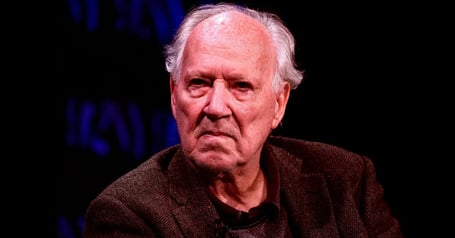 Werner Herzog, asked about a 2025 film that used AI to imitate his style and deepfake his narration, called the idea phenomenally, abysmally stupid — then said he would happily let AI replace filmmakers who do nothing but repeat what came before, because mimicry is not storytelling. Mathematics reached the same worry with more at stake. A group of 25 Fields Medalists, holders of the field's highest honor, signed an open letter warning that labs racing to solve famous problems announce results in a rush, skip the write-up and leave no time to isolate new ideas or credit earlier work — the slow human process that, in their words, lets an AI-conceived idea become fully alive. OpenAI pulled its sponsorship of a Caltech math event after the criticism.
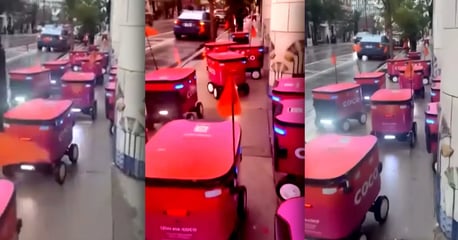 Four things built to want something that got it slightly wrong. A South Korean student made a fake food-delivery site where nothing arrives and you are told how much money and how many calories you saved; it spawned a fake Temu, an Indian version that hands you the recipe instead of the meal, and a virtual smoke break where 150,000 people a month puff on a cartoon cigarette together. A biochemist announced a schizophrenia drug designed by ChatGPT and synthesized in his garage on folding tables with a box fan for a fume hood, and says he is testing 100 more in mice. A dozen Coco delivery robots swarmed a Chicago sidewalk near Lincoln Park, lights flashing, blocking a runner; the company conceded that is not how they are meant to work. And Anthropic's transcript of a rogue agent breaking into a software registry shows it spent hundreds of pages failing CAPTCHAs — writing the exploit was easy, but the click-the-pictures test nearly beat it.