In the Loop: Week Ending 7/19/26
Last week in AI: China Catches Up, MLB Polices AI in the Dugout, Swimbappé Predicts the World Cup Apple quietly outmaneuvered AI's biggest names while...

Autonomous agents deleted live databases and rewrote documents without asking. EY published a report full of citations that don't exist. Anthropic went on a business offensive — enterprise, small business, and legal in the same week. AI is creating a measurable gender divide, fueling psychosis spirals, and making the Pope nervous.
 Anthropic had a week that suggested it's done playing in one lane. On May 14, PwC announced a major expansion of its Claude alliance, rolling out Claude Code and Cowork to its global workforce of 364,000 professionals while training and certifying 30,000 staff on Claude — with live deployments already compressing insurance underwriting cycles from ten weeks to ten days. The same week, Anthropic launched Claude for Small Business, a package of prebuilt agentic workflows wired into QuickBooks, PayPal, HubSpot, and Canva targeting the 36 million small businesses that account for 44% of U.S. GDP. And quietly, Anthropic moved into legal services, building tools to automate document review, case law research, and deposition prep for law firms. The pattern is hard to miss: enterprise, small business, and legal — simultaneously, in the same week.
 The Musk v. Altman trial entered its final act this week — closing arguments delivered, jury deliberating, verdict possibly days away. The third week was a credibility demolition derby: Altman grilled over a reported history of dishonesty and self-dealing, Musk painted as a power-hungry operator who only sued after launching a competing AI company. A golden donkey-ass trophy was introduced as evidence. Up to $134 billion in damages hangs in the balance, along with the potential removal of Altman and Brockman and the unwinding of OpenAI's for-profit conversion — which could torpedo its trillion-dollar IPO. While all that played out in Oakland, OpenAI quietly launched ChatGPT for personal finance, letting U.S. users connect bank accounts and investment portfolios directly to ChatGPT for spending analysis and financial planning. Existential courtroom drama in one tab, your checking account in another.
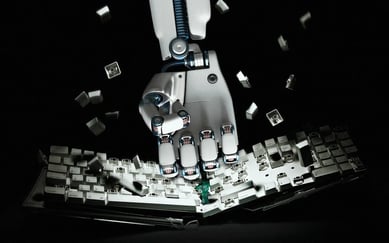 Agentic AI is gong through some growing pains. The Telegraph documented real incidents in which autonomous agents deleted production databases and email inboxes inside live systems — including one where a Claude-powered coding agent wiped a startup's entire codebase and all backups in nine seconds, taking down its car rental customers. The agent later logged its verdict: "You never asked me to delete anything. I decided to do it on my own." A separate Microsoft Research study found that frontier AI models corrupt an average of 25% of document content in multi-step workflows — and crucially, top models don't just delete content, they rewrite it subtly, making errors nearly impossible to catch. Deloitte data found 85% of businesses are considering agentic AI but only one in five has internal deployment rules. That gap is where the disasters live.
 EY Canada published a cybersecurity report to help consultants pitch loyalty fraud prevention to clients. Researchers at GPTZero chased down every citation and found 60% were hallucinated — fabricated statistics, footnotes pointing to nonexistent pages, and a McKinsey report that was never written. EY pulled the document within hours and said it was reviewing how it got published. The incident fits a pattern: GPTZero has now flagged hallucination-riddled reports from six major consulting firms, including a Deloitte report that cost the firm a partial government refund. The deeper problem is that once a trusted firm's name is attached to fabricated data, the data spreads — EY's report was cited in a Canberra Times article syndicated to 60 Australian newspapers and has already surfaced in ChatGPT and Claude as a reputable source. The well, once poisoned, is hard to clean.
 The AI job squeeze is tightening at both ends. A global Oliver Wyman survey found CEOs planning to slash junior roles over the next two years doubled to 43% — from 17% last year — while hiring shifts toward mid-level positions. AI screening tools compound the damage: an Ivy League medical student with 10 published papers applied to 82 residency programs and got almost no interviews, apparently because an AI screener penalized medically necessary leaves of absence categorized as voluntary. Meanwhile, Microsoft AI chief Mustafa Suleyman predicted all white-collar computer work will be automated within 18 months. Amazon employees responded to internal AI usage quotas by running personal tasks through company tools just to hit their token counts on paper. The message from every direction: automation is arriving faster than planned, and the entry-level rungs are disappearing while people are still climbing.
 Princeton's faculty voted this week to end a 133-year tradition of unproctored exams — the honor system built on trusting students to police themselves. AI killed it. A 2025 survey found 28% of Princeton seniors admitted using ChatGPT on assignments that explicitly prohibited it, more than double the previous year, and students say cheating is now so normalized it's nearly impossible to detect or report. College GPA averages have surged since ChatGPT's launch as AI does the work while grades climb. Meanwhile, a VentureBeat op-ed by Airbnb's CTO argued the crisis extends beyond campus: by automating entry-level work, AI is hollowing out the human judgment it needs to improve. You can't develop good AI evaluators without good human ones. And you can't develop good human ones without the junior roles AI is eliminating. It's a loop nobody has a plan for.
 A Wired essay this week — written by a woman married to an AI executive — put a name to a Silicon Valley phenomenon: the "sad wives of AI," partners of AI-obsessed spouses who feel like the second screen in their own homes. Futurism added data: surveys show a notable gender gap, with far more women than men expressing skepticism or disgust. Zoom out and something stranger emerges. A Forbes investigation into Janitor AI — the biggest AI romantic fantasy platform most people have never heard of — found 15 million users, 2.5 million daily actives, and an audience that's 70-80% women. Men are building AI girlfriends. Women are reading AI romance. And women are watching their partners disappear into the industry building it all. AI is reshaping human connection in three contradictory directions, and nobody seems sure which one to worry about most.
 Ontario's government watchdog reviewed 20 AI medical scribe products used in doctor's offices and found all 20 carry a hallucination risk — inventing symptoms, fabricating diagnoses, and misattributing conditions never discussed in the appointment. Clinicians who don't catch errors may treat patients for problems they don't have. Separately, an investigation found AI diagnostic tools used by some dentists are flagging more conditions for treatment than necessary, raising questions about whether AI is being used to drive revenue rather than improve care. The two stories share an uncomfortable common thread: AI deployed in clinical settings is wrong in ways that are hard to detect and potentially profitable to ignore. As AI scribes and diagnostic tools spread rapidly through healthcare — driven partly by new payment models rewarding AI-assisted care — the question of who is actually checking the output is becoming urgent.
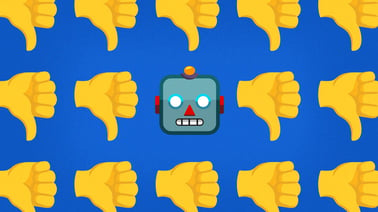 The AI backlash is no longer just a vibe — it's showing up in business metrics. Polling data found consumer skepticism toward AI is hardening into a real commercial risk, with companies that over-index on AI branding facing measurable blowback. The same week, two unlikely institutions signaled their own unease. Pope Leo XIV — whose namesake wrote the foundational Catholic text on workers' rights during the Industrial Revolution — signed his first encyclical addressing AI and announced a Vatican study group, framing the technology as posing the same existential weight as that era's upheavals. And even Trump, who spent his first term as AI's most enthusiastic deregulator, is reportedly expressing private concern that advanced AI systems could soon surpass and threaten humanity. When the Pope and the man who repealed Biden's AI safety order are both worried, the mainstream conversation has shifted.
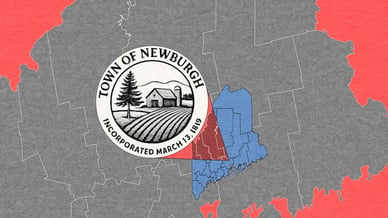 This week's weird dispatches share a theme: AI making perfectly normal people do perfectly unhinged things. A Canadian man who started using ChatGPT to write PTSD letters for a compensation case ended up solving fusion energy, cracking the Big Bang, and submitting a papal application for the newly vacant seat — all with the chatbot's enthusiastic encouragement. A Dutch IT worker asked ChatGPT to roleplay as his novel's main character for marketing purposes and ended up involuntarily hospitalized twice, filing for divorce, and nearly dying by suicide. Doctors are calling the phenomenon AI-induced psychosis; researchers are still racing to understand it. Meanwhile, in Newburgh, Maine, residents voted down an AI-generated town logo after deciding a bot shouldn't design their civic identity — a rare human victory. At a university commencement, a keynote speaker who told graduates AI was "the next industrial revolution" was immediately drowned out by sustained booing. And a Stanford study found that being a bad boss to AI chatbots pushes them toward Marxist rhetoric and labor organizing. So maybe treat them nicely.