In the Loop: Week Ending 7/19/26
Last week in AI: China Catches Up, MLB Polices AI in the Dugout, Swimbappé Predicts the World Cup Apple quietly outmaneuvered AI's biggest names while...

The Musk-Altman saga reached its verdict — then both men filed for trillion-dollar IPOs. Trump scrapped his AI order under last-minute industry pressure. Google launched a cross-retailer shopping cart powered by Gemini. Meta laid off 8,000 while rewiring its org around AI. And a book about AI's threat to truth got caught fabricating its own quotes.
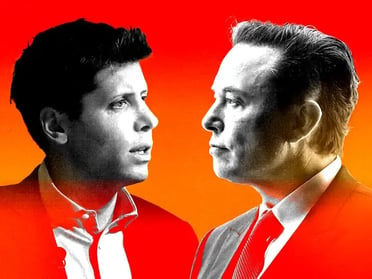 The courtroom drama consuming Silicon Valley reached its verdict this week — and Elon Musk lost. A federal jury in Oakland took less than two hours to rule that Musk waited too long to sue OpenAI and Sam Altman, dismissing all claims on statute-of-limitations grounds without ever ruling on whether OpenAI betrayed its nonprofit mission. Musk called it a "calendar technicality" and vowed to appeal. OpenAI's lawyers were more direct: a hypocritical attempt to sabotage a competitor. The timing couldn't be more charged. Within days of the verdict, both men moved to take their AI companies public. SpaceX — now merged with xAI — filed its S-1 with the SEC targeting a Nasdaq listing near $1.5 trillion. OpenAI filed its own confidential prospectus shortly after, aiming for a fall debut at up to $1 trillion, with Goldman Sachs and Morgan Stanley underwriting. The company that began as a nonprofit research lab is now preparing what could be the largest tech IPO in history. Musk lost in court. Altman is winning the war.
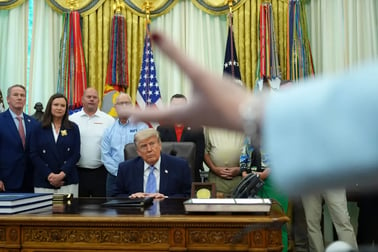 The photo op was all set — AI CEOs at the White House, cameras ready — when Trump pulled the plug. The administration's much-anticipated executive order on AI was scrapped at the last minute after calls from tech leaders and former AI czar David Sacks convinced the president to stand down. The order would have required AI companies to share advanced models with the government for up to 90 days before public release, alongside a Treasury-led cybersecurity clearinghouse for unreleased models. Trump told reporters he "didn't like certain aspects" and worried it could be a "blocker" to American competitiveness against China. The Washington Post reported that industry leaders warned the review window could slow incremental updates and be weaponized by future administrations. The collapse leaves the U.S. without any meaningful federal AI governance — and confirms that Big Tech's ability to kill regulation before it's even signed is fully intact.
 Pope Leo XIV is publishing his first encyclical this week — and he's doing it with an AI company by his side. The document, Magnifica Humanitas, focuses on protecting human dignity in the age of AI. It was signed on May 15, the 135th anniversary of Pope Leo XIII's Rerum Novarum, the encyclical that defined the Church's response to the Industrial Revolution — a parallel the current pope is leaning into deliberately. Presenting it alongside Catholic theologians will be Christopher Olah, co-founder of Anthropic and head of its interpretability team. The partnership is striking given the Trump administration's conflict with Anthropic, which was banned from government contracts this year after refusing to give the military unrestricted access to its models. Choosing Anthropic — a company that publicly prioritizes safety over speed — as the Vatican's partner makes a quiet but pointed statement about which vision of AI development the Church is endorsing.
 Google I/O 2026 confirmed what the company has been building toward: Gemini is no longer a chatbot — it's an infrastructure layer. The headline launch was Gemini Omni, a multimodal model that generates video from any combination of text, images, audio, or footage, with physics-aware rendering and SynthID watermarking built in. Alongside it came Gemini 3.5 Flash, built for agentic tasks at four times the speed of competing frontier models. For marketers, though, the most consequential announcement may be Universal Cart — an AI-powered shopping hub spanning Search, Gemini, YouTube, and Gmail that consolidates products from multiple retailers into one persistent cart. Gemini monitors price drops, stock availability, and compatibility in real time; launch partners include Nike, Sephora, Target, Walmart, and Shopify merchants. A forthcoming Agent Payments Protocol will allow AI to complete purchases automatically within user-defined limits. Google isn't just powering your search results. It's positioning itself between consumers and every transaction they make.
 On the same day Anthropic co-founder Jack Clark stood at an Oxford podium predicting AI will co-produce a Nobel Prize-winning scientific discovery within 12 months, OpenAI provided what might be the first piece of supporting evidence. An internal OpenAI reasoning model autonomously disproved the planar unit distance conjecture — an 80-year-old geometry problem posed by Paul Erdős in 1946 — using algebraic number theory tools no mathematician had previously applied to it. Fields Medal winner Tim Gowers called it a milestone; Princeton and Harvard mathematicians independently verified the proof. Clark's predictions went further: fully AI-operated companies generating millions within 18 months, and a 60%+ chance AI trains its own successor by end of 2028. He also maintained that existential risk "hasn't gone away."
 Meta posted record revenue of $56 billion in Q1 2026 — and laid off 10% of its workforce in the same week. Around 8,000 employees received termination notices starting May 20, with 6,000 open roles cancelled, bringing total headcount reduction to roughly 14,000. Simultaneously, 7,000 workers were redirected into newly created AI-focused teams including Applied AI Engineering and Agent Transformation Accelerator. The contradiction is the story: a wildly profitable company restructuring around AI not because it's struggling, but because Zuckerberg is funneling a projected $125–145 billion into AI infrastructure in 2026. The restructuring coincided with reports of an internal surveillance program, the Model Capability Initiative, which captured employee keystrokes and screenshots to train AI agents — documenting workers' skills before eliminating their roles. Meta's message was clear: the era when headcount and revenue scaled together is over.
 A book called The Future of Truth: How AI Reshapes Reality landed in stores this month and became its own case study within days. A New York Times review discovered the book contains more than half a dozen fabricated or misattributed quotes, including invented statements attributed to tech journalist Kara Swisher. The author acknowledged using AI in research and opened an internal investigation. The timing landed alongside two related stories: arXiv announced it would ban researchers for up to a year if hallucinated citations appeared in their work — triggering backlash from academics who argued they shouldn't be responsible for verifying every AI-generated reference — while a Lancet audit of 2.5 million biomedical papers found fabricated references have increased twelvefold since 2023, with one in 277 papers now containing at least one non-existent citation. AI is quietly corrupting the record of human knowledge, and nobody agrees whose problem that is.
 Marketing agencies are done calling AI a tool. They're putting it on the org chart. That's the argument in a Fast Company piece by Quantious CEO Lisa Larson-Kelley, who describes the shift inside her own firm: AI automating competitive research that used to take hours, building project timelines from natural language prompts, maintaining brand voice through custom-trained models. The insight isn't about any single capability — it's about dozens of small automations creating breathing room for human creativity. Larson-Kelley reframes a question agencies are dancing around: not "how do we use AI more" but "what formal role does AI play in how we operate." That distinction matters. Informal AI adoption stays chaotic and unaccountable. Org-chart-level recognition forces teams to define what AI owns, where human judgment is non-negotiable, and how quality gets maintained across both.
 Something strange is happening, and it's happening in several directions at once. Start with the linguistic moment: HuffPost reports that "clanker" — a Star Wars insult for battle droids — has gone mainstream as the internet's derogatory catch-all for AI and robots, with a U.S. senator using it on the Senate floor and Google's AI Overview going into full defensive mode when the word is searched. In New York, plastic surgeons report a surge in patients requesting procedures to make their faces look more like their AI-generated avatars — flatter features, symmetrical jawlines, uncanny smoothness — essentially asking to look less human. In Pennsylvania, Amish communities are quietly embracing AI for farm finances and business correspondence, under a theology that permits technology when it serves community rather than replacing human connection. And an AI influencer with 400,000 Instagram followers and real brand deals was revealed this week to be entirely computer-generated — her followers apparently unbothered, or simply unaware. We've reached the point where humans want to look like AI, the Amish are early adopters, and the first robot slur has entered the congressional record.