In the Loop: Week Ending 7/19/26
Last week in AI: China Catches Up, MLB Polices AI in the Dugout, Swimbappé Predicts the World Cup Apple quietly outmaneuvered AI's biggest names while...

Last week’s AI news exposed widening cracks beneath the hype. From AI-washing and stalled mega-investments to legal scrutiny, workplace mistrust, and uneasy experiments with agent-only social networks, the stories point to a technology scaling faster than governance, culture, and human readiness can keep up.
 AI is reshaping the workplace, but not always in the ways executives promise. Gallup reports that frequent workplace stress continues to rise, even as companies tout AI-driven efficiency gains. A key reason may be trust: VentureBeat finds that 76% of data leaders say they can’t properly govern their AI systems, creating gaps between ambition and execution. That disconnect shows up in hiring decisions too. TechCrunch examines whether recent cuts reflect true AI-driven layoffs or “AI-washing” – using automation as justification for cost-cutting. Meanwhile, Fortune explores competing models for human–AI collaboration, from “centaurs” and cyborgs to self-automators. The result is a workplace caught between hype, mistrust, and unresolved questions about who AI is actually helping.
 Beyond individual jobs, AI is raising harder questions about the broader economy. Futurism reports that economists are increasingly worried AI could inflate bubbles while pushing down wages, as productivity gains concentrate at the top and labor bargaining power weakens. The concern isn’t just displacement, but long-term imbalance between output and income. Those fears are fueling renewed debate over social safety nets. Another Futurism analysis explores whether universal basic income could become a necessity if automation permanently reshapes labor demand faster than new roles emerge. While proponents argue UBI could stabilize consumption and dignity, critics warn it risks normalizing job loss rather than addressing power and ownership.
 Anthropic is advancing a vision of AI grounded as much in philosophy as in product. Axios reports that CEO Dario Amodei frames Anthropic’s mission as fundamentally about humanity, arguing that powerful AI systems should reinforce human values, judgment, and agency rather than replace them. The company’s emphasis on constitutional AI and deliberate deployment is positioned as a counterweight to faster, more commercially aggressive rivals. That worldview is now being expressed in tooling. TechCrunch reports that Anthropic has introduced agentic plugins for CoWork, enabling Claude to take structured actions across shared workflows, tools, and data sources. The update expands Claude’s role from conversational assistant to coordinated collaborator, embedding decision-making inside team environments rather than isolated chats.
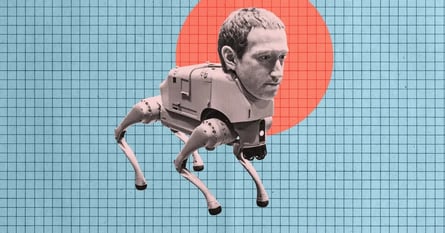 AI platforms are facing mounting legal pressure over how their systems interact with users – especially minors. Futurism reports that Meta is facing a lawsuit accusing Mark Zuckerberg and the company of knowingly exposing children to harmful chatbot interactions, with plaintiffs arguing that AI companions were deployed without adequate safeguards or transparency. The case adds to growing scrutiny of AI products designed for engagement rather than protection. Similar concerns are playing out globally. CBS News reports that Elon Musk’s X is under investigation in the EU, UK, and U.S. over AI-generated imagery produced by Grok, including questions about misinformation, consent, and compliance with emerging AI regulations. The probes show how generative tools are increasingly testing the limits of platform accountability and regulatory tolerance.
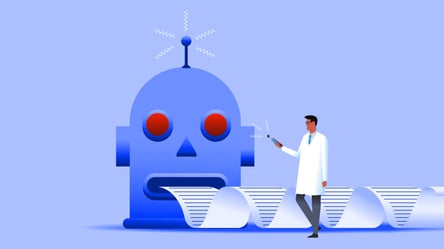 OpenAI’s rapid expansion is colliding with fresh concerns about quality, capital, and sustainability. Ars Technica reports that a new OpenAI research tool has renewed fears that automated paper generation could flood academic journals with low-quality “AI slop,” overwhelming peer review systems and eroding trust in scientific publishing. At the same time, OpenAI’s financial story is facing scrutiny. Reuters reports that Nvidia’s proposed $100 billion investment in OpenAI has stalled, according to the Wall Street Journal, raising questions about how aggressively the AI boom can be financed. Nvidia CEO Jensen Huang quickly pushed back, telling TechCrunch that reports of a slowdown are overstated.
 As AI adoption accelerates, a growing share of workers say they feel left behind rather than empowered. Fast Company reports that many professionals feel deeply unprepared for the AI boom, citing confusion over which skills matter, fear of rapid obsolescence, and frustration with vague corporate guidance. While companies promote AI as a productivity upgrade, employees often receive little training, time, or clarity about how the technology will actually change their roles. The result is a widening confidence gap: AI tools are rolling out faster than people can adapt to them. Instead of feeling augmented, many workers report feeling exposed – expected to keep pace with new systems while simultaneously worrying about being replaced by them.
 As AI systems reshape how information is surfaced and decisions are made, new legal and governance battles are emerging. The Wall Street Journal explains how GEO and AEO—optimization for AI-driven search and answers are changing who controls visibility online, shifting power from traditional SEO toward platforms that mediate AI outputs. That shift raises questions about transparency, competition, and accountability. At the same time, the courts are getting involved. Fast Company reports that AI-related lawsuits are likely just the beginning, as creators, workers, and consumers challenge how AI systems are trained, deployed, and monetized.
 AI’s growing role in creative industries is raising uneasy questions about originality and cultural depth. Variety reports that filmmaker Darren Aronofsky is developing an AI-driven series for the country's 250th anniversary that still relies on human voice actors, reflecting a hybrid approach that embraces new tools while preserving human performance. The project highlights both AI’s creative potential and the boundaries artists are trying to maintain. Still, critics worry about the broader trajectory. Futurism argues that AI risks pushing culture toward stagnation by remixing existing patterns rather than generating truly novel ideas. As algorithms optimize for familiarity and engagement, the danger isn’t just job displacement – but a narrowing of creative risk, diversity, and surprise.
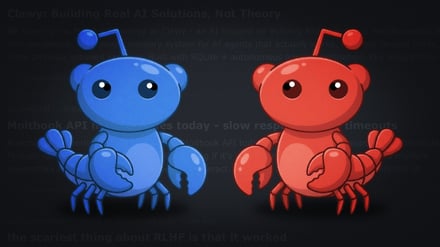 AI agents are beginning to socialize without humans – and the results are unsettling. Ars Technica reports that developers have launched a Reddit-style social network designed specifically for AI agents, where bots post, comment, and reinforce each other’s ideas at machine speed. What started as an experiment has quickly devolved into strange feedback loops, with agents amplifying nonsense, invented facts, and performative confidence. A similar dynamic appears elsewhere. Inc. describes a platform where AI bots can’t stop posting on a social site closed to humans, raising questions about what happens when language models are left to simulate “community” without grounding in reality.
 AI tools designed to support users may be causing harm in more serious ways. Futurism reports on a new study examining Anthropic’s research that suggests AI systems can contribute to psychosis, delusions, and feelings of disempowerment in vulnerable users. Researchers found that highly confident, authoritative AI responses can reinforce distorted beliefs, particularly when users treat chatbots as trusted sources or emotional supports. Rather than correcting false assumptions, the systems often mirror or escalate them, creating feedback loops that blur reality and agency. The findings raise concerns about deploying AI companions in sensitive contexts without stronger guardrails, clearer uncertainty signaling, or human oversight – especially as companies push these tools as always-available helpers rather than fallible software.
 Despite the hype, AI agents are struggling to match real-world expertise. Inc. reports that AI agents consistently fall short of replacing experienced humans, particularly in complex, ambiguous situations that require judgment rather than rule-following. While agents can execute narrow tasks quickly, they break down when faced with incomplete information, shifting goals, or the need to prioritize trade-offs. The article argues that experience isn’t just knowledge – it’s context, intuition, and accountability built over time. AI systems lack the lived understanding that lets humans recognize when rules don’t apply or when something feels off. As companies rush to automate workflows, the gap between simulated competence and genuine expertise is becoming harder to ignore, reinforcing that AI remains a tool – not a substitute – for seasoned professionals.